
By late September, most commercial parking lots in New Jersey and Pennsylvania have already survived one winter’s worth of freeze-thaw damage and a full summer of heat and traffic. The cracks that opened in March have widened. The low spots that held water after every spring rain are still holding water. And the property owner who told themselves they’d deal with it “next season” is now looking at a much shorter window before the ground gets too cold to work with.
Fall is not just a convenient time to mill and resurface a lot. For a lot of properties in this region, it is the last realistic chance to get ahead of winter before the damage already sitting in the pavement gets worse.
In this article:
- Why fall sits in a narrow, valuable window for milling
- What actually happens to pavement during a milling project
- The damage that fall milling catches before winter makes it worse
- Milling versus full reconstruction: how the decision actually gets made
- What determines how long a fall milling project takes
- Common milling and resurfacing questions
- Planning your project before the weather turns
Why Fall Sits in a Narrow, Valuable Window for Milling
Asphalt compaction and curing depend on temperature. Mix that goes down too cold does not bond properly, which shortens the life of the finished surface no matter how well the rest of the project is done. That is why paving contractors throughout the Northeast treat late fall as a hard deadline rather than a rough guideline.
At the same time, fall offers something spring and summer do not: a pavement surface that has already revealed exactly where it is weak. A full winter of freezing and thawing, followed by a summer of heat and traffic, exposes every soft spot, every drainage flaw, and every area where the base has started to shift. Milling in the fall means working with a lot that has already told you where the problems are, rather than guessing based on a surface that looks fine in June but hasn’t been tested by weather yet.
What Actually Happens to Pavement During a Milling Project
Asphalt milling removes the top layer of deteriorated pavement using a machine fitted with a rotating drum of cutting teeth, grinding the surface down to a consistent depth without disturbing the stable material underneath. The result is a clean, even surface that a new layer of asphalt can bond to properly.
This matters because a lot of the damage visible on an older parking lot, oxidation, surface cracking, and shallow rutting, lives entirely in that top layer. If the base beneath it is still doing its job, which is distributing weight and resisting movement, milling and resurfacing restores the driving surface without the cost and disruption of tearing the property down to bare ground.
The milled material itself is not wasted. It is typically reclaimed and reused in new asphalt mixes or as base material on other projects, which is one reason milling tends to be a more efficient use of material than demolition and full-depth replacement.
The Damage That Fall Milling Catches Before Winter Makes It Worse
Water is the mechanism behind almost every serious pavement failure in this climate, and fall is the last chance to address it before the freeze-thaw cycle starts again.
Here is how that cycle works. Water finds its way into any crack or low spot in the surface. When temperatures drop, that water freezes and expands, which physically forces the crack wider from the inside. As the ice melts and the ground shifts again, the crack doesn’t close back up. It stays wider than before, ready to take in even more water the next time it rains. Each winter this repeats, the damage compounds instead of resetting.
Milling before winter interrupts that cycle. Instead of an existing crack network holding water into the coldest months, the surface goes into winter fresh, sealed, and without the small openings that ice needs to do its damage.
Properties that skip this window and wait until spring to address the same pavement are usually dealing with cracks that have widened, potholes that have opened where there were only depressions before, and in some cases, base damage that turns what would have been a milling project into a full reconstruction.
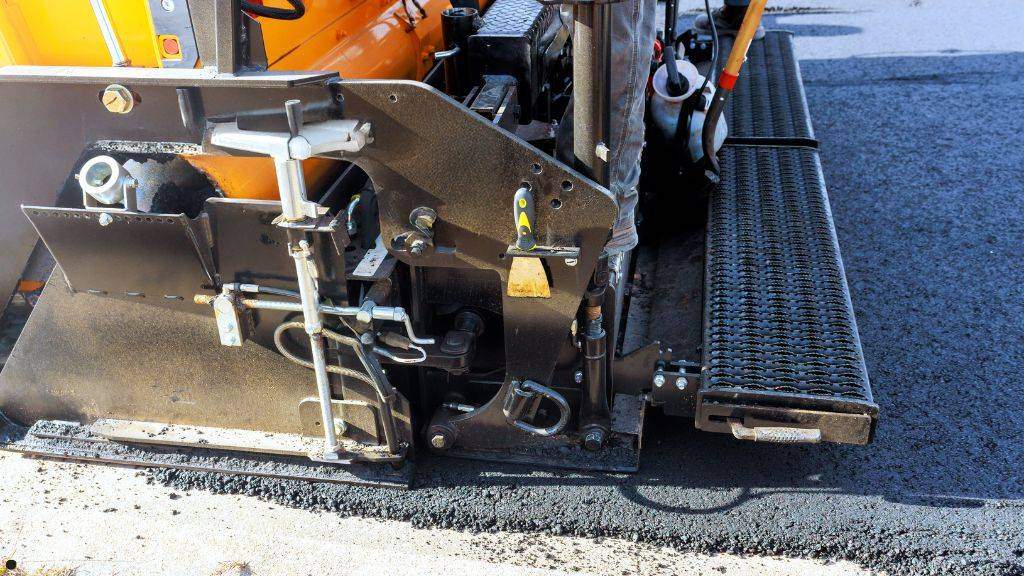
Milling Versus Full Reconstruction: How the Decision Actually Gets Made
Property owners often assume that if a lot looks bad enough, it must need full reconstruction. That is not usually how the decision works in practice.
The real question is what condition the base is in, not how rough the surface looks. A lot with widespread surface cracking, oxidation, and even some shallow rutting can often be milled and resurfaced successfully if the base underneath is still stable and distributing weight the way it’s supposed to. A lot with sinking sections, spreading alligator cracking, or persistent soft spots that don’t firm up even in dry weather is telling a different story: the base itself has failed, and resurfacing over it will fail again within a season or two.
As our team likes to put it after evaluating properties across New Jersey and Pennsylvania for years, the surface is the easiest thing to judge and the least reliable thing to judge by. An accurate read on whether a lot needs milling or full reconstruction only comes from an on-site evaluation, not a drive-by look at the cracking pattern.
Deciding factors typically include:
- Whether the base shows signs of movement, sinking, or persistent soft spots
- How deep the existing cracking and rutting actually goes
- Drainage patterns and whether water is pooling due to surface wear or a grading problem underneath
- How much traffic and vehicle weight the lot handles day to day
What Determines How Long a Fall Milling Project Takes
Every property is different, and the honest answer to “how long will this take” depends on several variables rather than a fixed number. Lot size, the depth of milling required, how many access points need to stay open during the work, and weather all play a role in scheduling a project.
What stays consistent is the sequence. Milling comes first, followed by any base repairs identified during the milling process, then the new asphalt layer, then striping once the surface has cured enough to hold paint. Rushing any one of these steps to fit a shorter timeline usually costs more in the long run than scheduling the project with enough lead time in the first place.
Common Milling and Resurfacing Questions
How cold can it get before milling and paving has to stop for the season?
Asphalt needs stable, mild temperatures to compact and cure properly, which is why paving contractors in this region generally stop scheduling new milling and resurfacing work once temperatures drop too low and stay there. This is part of why fall projects need to be planned early rather than pushed to the last available week.
Does milling and resurfacing take longer than a full parking lot reconstruction?
No. Because milling preserves the base and removes only the damaged top layer, projects generally move faster than full-depth reconstruction, which requires removing the entire pavement structure and rebuilding it from the ground up.
Will milling and resurfacing fix a drainage problem?
It depends on the cause. If poor drainage is the result of a worn, uneven surface, resurfacing after milling can improve how water moves across the lot. If the drainage issue comes from the original grading or a failed base, milling alone will not resolve it, which is why an evaluation before the project starts matters.
Can a parking lot reopen right after milling is finished?
The milled surface itself can often support limited traffic, but the lot generally needs to stay closed through the paving and curing process before full use resumes. Planning around this closure window is part of scheduling the project for a time that works for the property.
What happens if a lot isn’t milled or resurfaced before winter?
Existing cracks and low spots continue collecting water through the coldest months, and the freeze-thaw cycle widens that existing damage rather than leaving it as is. Many properties that delay a fall project end up facing a larger repair, sometimes a full reconstruction, by the following spring.