
Princeton pavement sits on ground most contractors never think to ask about.
Homes in the Western Section and along Bayard Lane, campus buildings tied to Princeton University and the Institute for Advanced Study, and the shops lining Nassau Street all rest on the same underlying geology: a stretch of the New Jersey Piedmont where thin, clay-heavy soil sits directly over shale, sandstone, and, along the northern edge of town, hard diabase trap rock. That bedrock is close to the surface almost everywhere in Princeton, and it changes what any paved surface, driveway, parking lot, or campus lot, needs to hold up long term.
That is why homeowners, facilities managers, and business owners throughout Princeton rely on Stanley Paving for driveway paving, parking lot paving, sealcoating, asphalt milling, asphalt repair, crack sealing, and line striping. Stanley Paving has worked across Mercer County and the wider Delaware Valley since 1953, and the company approaches every Princeton project with that geology in mind rather than a standard install.
Piedmont soils in this part of New Jersey are typically shallow, under a meter deep in many spots, with more clay and less sand than the coastal soils found closer to the shore. Water does not move through that soil quickly, and where shallow bedrock sits underneath, it has almost nowhere to go. On older properties in Princeton’s historic district and the surrounding residential sections, that combination shows up as standing water along pavement edges and surfaces that heave after a hard freeze.
Princeton’s own engineering rules add another layer most nearby towns do not have. Any residential project that creates 400 square feet or more of new impervious surface, which includes a resurfaced or expanded driveway, triggers a stormwater and site plan review by the Municipality’s Engineering Department before a zoning or building permit can move forward. Properties inside the Princeton Historic District can also involve the Historic Preservation Office, since the district covers 370 acres and includes some of the oldest streets in town.
Stanley Paving accounts for both realities at the estimate stage, from grading and drainage on shallow Piedmont soil to the documentation a property will need before work can start.
Mature tree canopy is another factor specific to Princeton’s older streets. Many driveways in the Western Section and around the Battlefield area run alongside large, decades-old shade trees, and root growth beneath the surface can lift and crack asphalt from below even when the base was installed correctly years earlier. Repaving in these spots often means addressing root intrusion at the sub-base level, not just resurfacing over the existing problem.

The Western Section and the streets around the Institute Area carry some of the oldest driveways in town, many original to homes built before mid-century, and they typically need full driveway paving or resurfacing rather than a simple overlay. Stanley Paving handles that work, along with asphalt repair and crack sealing for driveways that are structurally sound but showing surface damage. See our full service list.
Princeton North and the neighborhoods bordering Herrontown Woods and Community Park North sit on similar Piedmont soil but tend to have newer pavement, where sealcoating and crack sealing do more of the protective work. Stanley Paving sealcoats residential driveways here on a routine schedule to slow the effects of clay soil and freeze-thaw cycling before they turn into cracks.
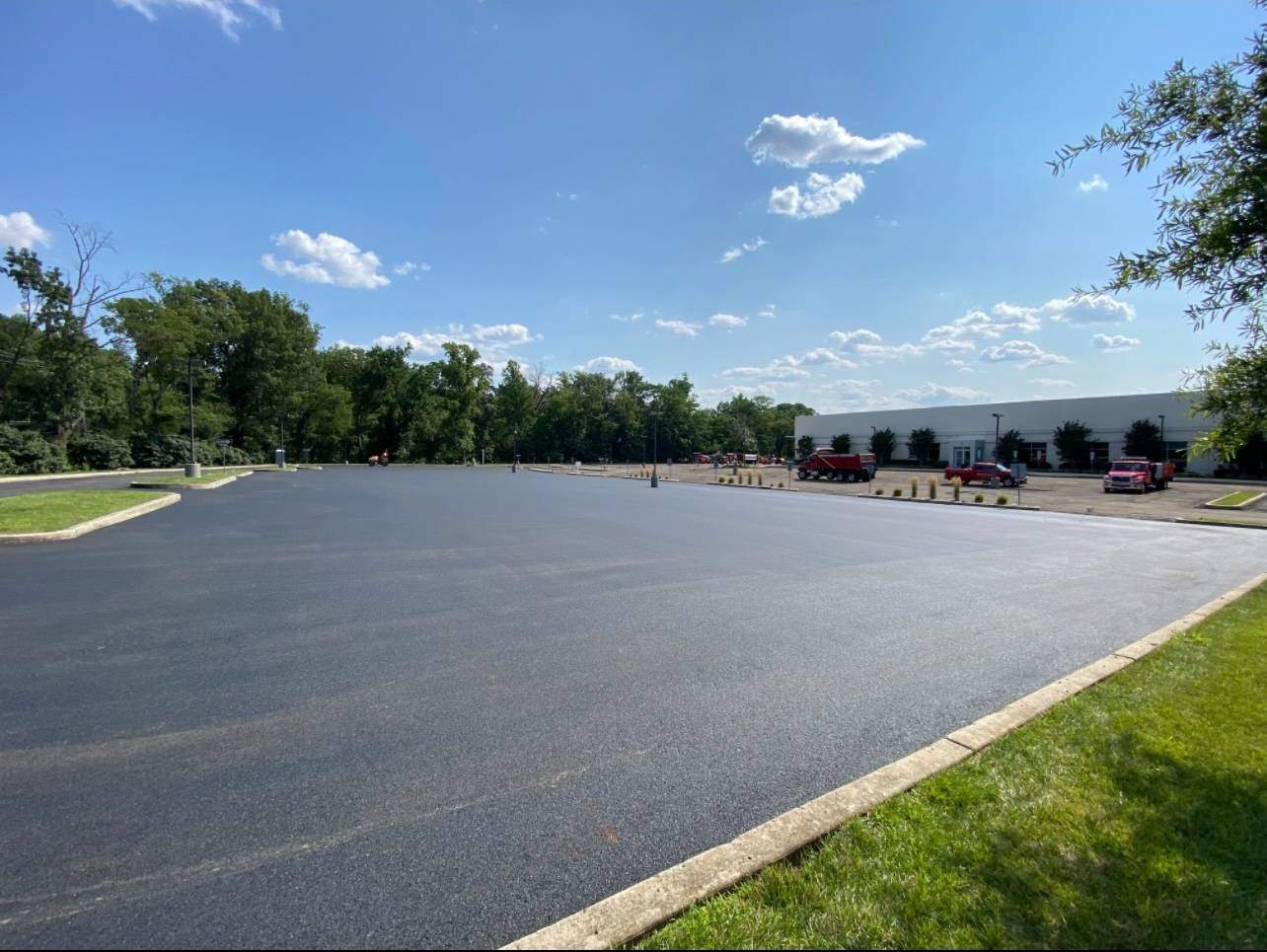
Princeton University’s campus buildings, the Institute for Advanced Study, and the private schools scattered through town generate a different paving need: parking lots and access roads that see heavy, consistent traffic and must stay compliant with accessibility standards. Stanley Paving works with facilities managers on parking lot paving, line striping, and asphalt milling for these institutional properties, with timing usually built around the academic calendar rather than a standard contractor schedule, since a lot serving classrooms or a dining hall cannot sit closed mid-semester. Summer and winter breaks are typically when larger milling or reconstruction work happens.
The commercial strip along Route 206 and the properties near the Princeton Shopping Center round out the town’s third paving profile: retail and office lots needing durable surfaces and clear striping for customers and delivery traffic.
Stanley Paving estimates account for the Municipality’s 400-square-foot stormwater review threshold from the start, so property owners are not caught off guard partway through a project.
Between the 370-acre Princeton Historic District and the individually designated properties scattered through town, a meaningful share of Stanley Paving’s Princeton work involves coordinating with what a historic property allows before crews ever show up.
Stanley Paving is licensed and insured in both New Jersey (NJ HIC #13VH00622000) and Pennsylvania (PA HIC #036800), useful for facilities managers and property owners who split their portfolio across Mercer County and the Philadelphia side of the Delaware.
Stanley Paving has been family-owned and operated since 1953. That continuity is part of why the company moves comfortably between a driveway resurfacing on a century-old Western Section lot and a parking lot project on a university campus in the same week.
If the project adds 400 square feet or more of new impervious surface, the Municipality’s Engineering Department requires a site plan and stormwater review before a zoning or building permit is issued. Smaller repairs that do not expand the paved footprint generally do not.
In most cases, yes, but the property may need to go through Princeton’s Historic Preservation Office depending on visibility from the street and the scope of the work. Stanley Paving can help determine what applies before the project starts.
Much of Princeton sits on shallow Piedmont soil over bedrock, so water that cannot drain downward often moves sideways instead, undermining the base beneath the surface. The fix is usually regrading and improved sub-base drainage rather than a new top layer alone.
Larger projects are typically scheduled around summer or winter break so lots stay usable while classes are in session. Smaller repair or striping work can often be phased to avoid disrupting daily access.